Fleet management guides for UK operators.
Plain-English guides on DVSA compliance, O-licence obligations, walkaround checks, defects and the practical side of running a UK fleet.
Showing 13–24 of 27 articles in Compliance
Abnormal loads: a planning checklist for small haulage operators
A plain-English planning checklist for abnormal loads, covering dimensions, notifications, route checks, responsibilities and records for small haulage operators.
Preventing bridge strikes: a route-planning guide for haulage offices
Bridge strikes are not only a driver problem. Transport offices need reliable vehicle-height records, route checks, driver briefings and an escalation routine when a route is uncertain.
HGV load security checks before dispatch
Load security should be checked before the vehicle leaves, not only when something moves on the road. This guide turns DVSA guidance into a practical office and driver routine.
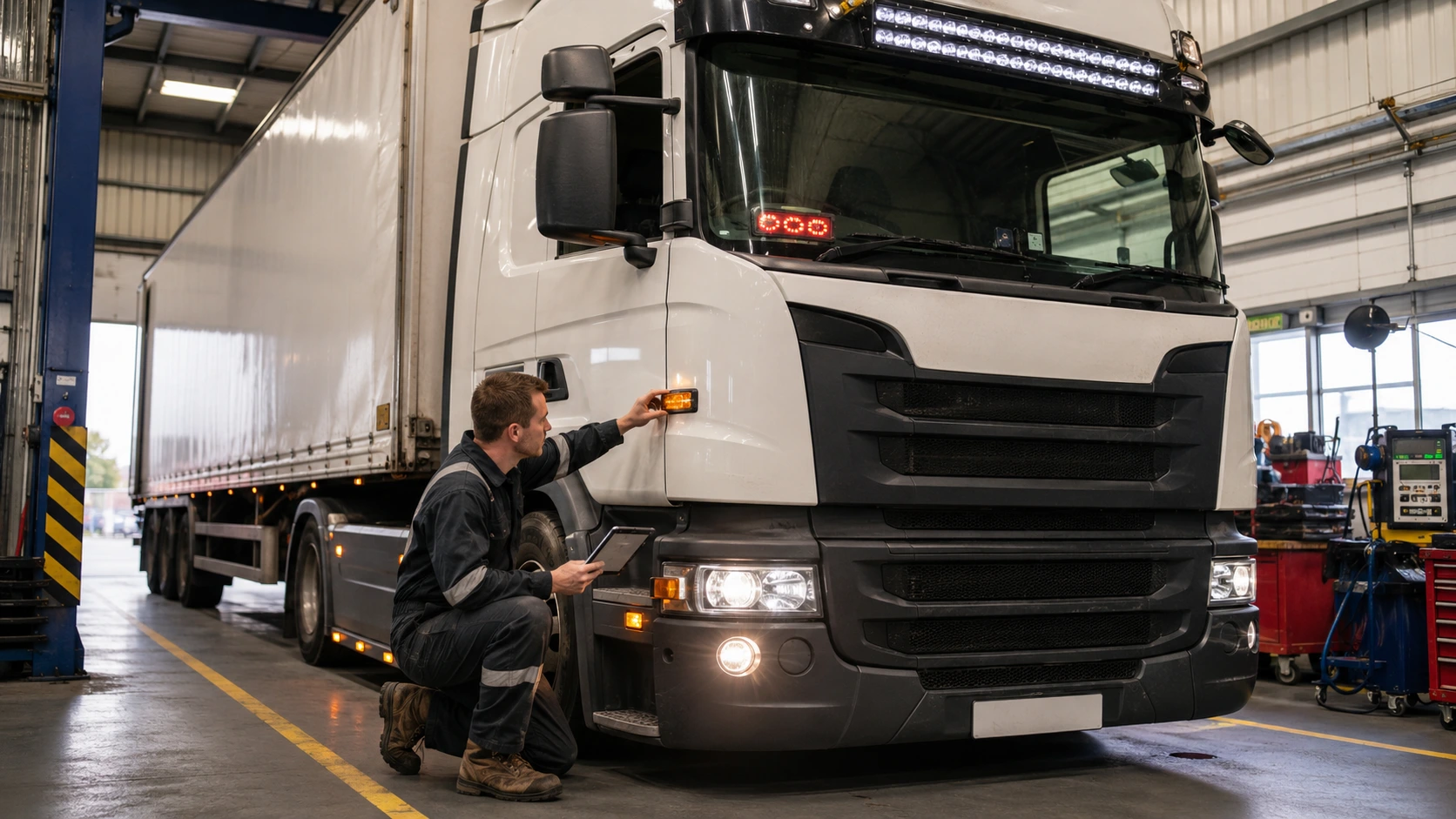
Are your HGV lights legal? DVSA warning on aftermarket lights and LED displays
DVSA has warned operators about illegal or non-compliant aftermarket lighting fitted to HGVs. Learn what to check before using VRU warning signs, decorative LED displays or blue beacons on the road.
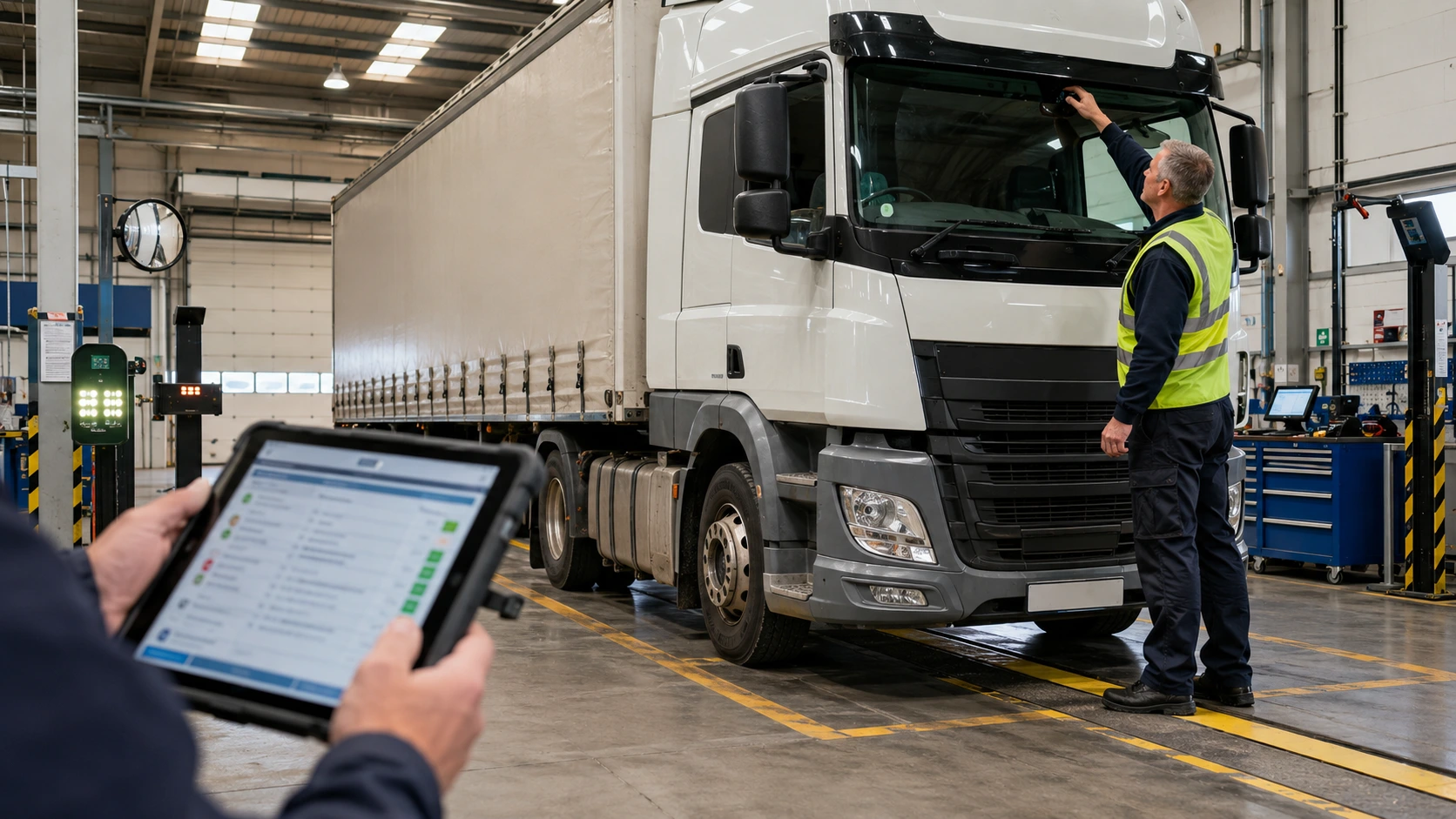
HGV MOT changes in 2026: what operators need to know
DVSA introduced several changes to heavy vehicle testing in 2026, including visual ADAS checks, digital PG10 notices and easier access to plating certificates. Here is what HGV operators need to know and check within their fleet records.
Assigning drivers, vehicles and trailers safely
Assignment is a safety and compliance checkpoint, not just scheduling. What offices should check before dispatch — driver, vehicle, trailer, warnings, VOR and job detail.
How to prepare for a DVSA roadside inspection as a small haulier
A practical roadside readiness checklist for small UK hauliers: driver documents, walkaround records, defect history, PMIs and office response.
Digital defect reporting for HGV fleets: what good evidence should include
A practical guide to the evidence a useful HGV defect report should capture, from asset details and photos to repair sign-off and VOR decisions.
What records should a UK haulage operator keep for DVSA compliance?
A practical checklist of the records UK haulage operators should keep for daily checks, defects, PMIs, driver compliance and O-licence control.
DVSA Earned Recognition explained: how to qualify
Operators who achieve DVSA Earned Recognition face fewer routine roadside checks. Find out what's required, how the scheme works, and what operators must do to qualify.
How long must vehicle inspection records be kept?
UK operators must keep vehicle inspection records for at least 15 months. Here's what that covers, why the retention period matters, and how to meet the requirement in practice.
Vehicle Off Road (VOR): what UK operators must do
VOR status is part of your O-licence maintenance undertaking. Here's when to take a vehicle off the road, what records you must keep, and how to manage the defect-to-repair cycle.
Want to manage compliance digitally?
HauliK gives UK transport operators digital walkaround checks, defect tracking, job management and driver compliance — in one platform.